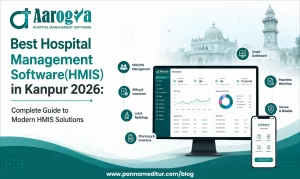
Best Hospital Management Software(HMIS) in Kanpur 2026: Complete Guide to Modern HMIS Solutions
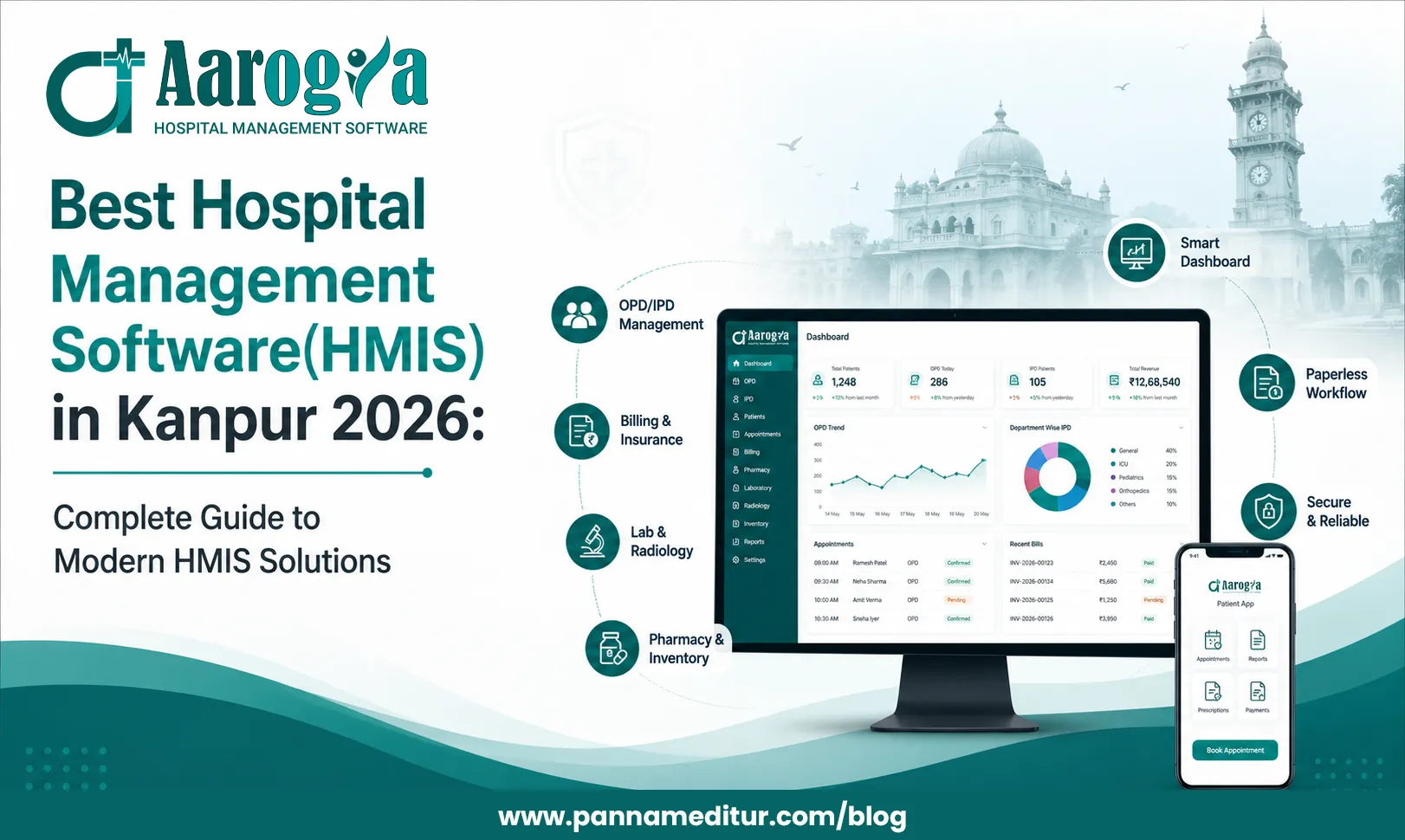
Table of Contents
ToggleFinding the Best Hospital Management Software, particularly in a place like Kanpur, is becoming increasingly important for hospitals and clinics looking to improve operational efficiency, patient care, and workflow management. As healthcare businesses grow, manually managing appointments, billing, patient data, pharmacy operations, diagnostics, and insurance workflows can become extremely complex and time-consuming.
Modern Hospital Management Information Systems (HMIS) assist healthcare professionals in automating activities, streamlining paperwork, improving departmental coordination, and creating a more connected healthcare environment.
Kanpur’s healthcare companies are progressively implementing digital healthcare technologies to optimize daily operations and improve patient experiences.
Advanced platforms, such as Aarogya HMIS , assist hospitals in managing clinical, administrative, and financial activities inside a unified system.
This article will teach you about the significance of HMIS software, the essential features to consider, the benefits for hospitals, and how to select the finest hospital management solution for modern healthcare operations.
What is hospital management software?
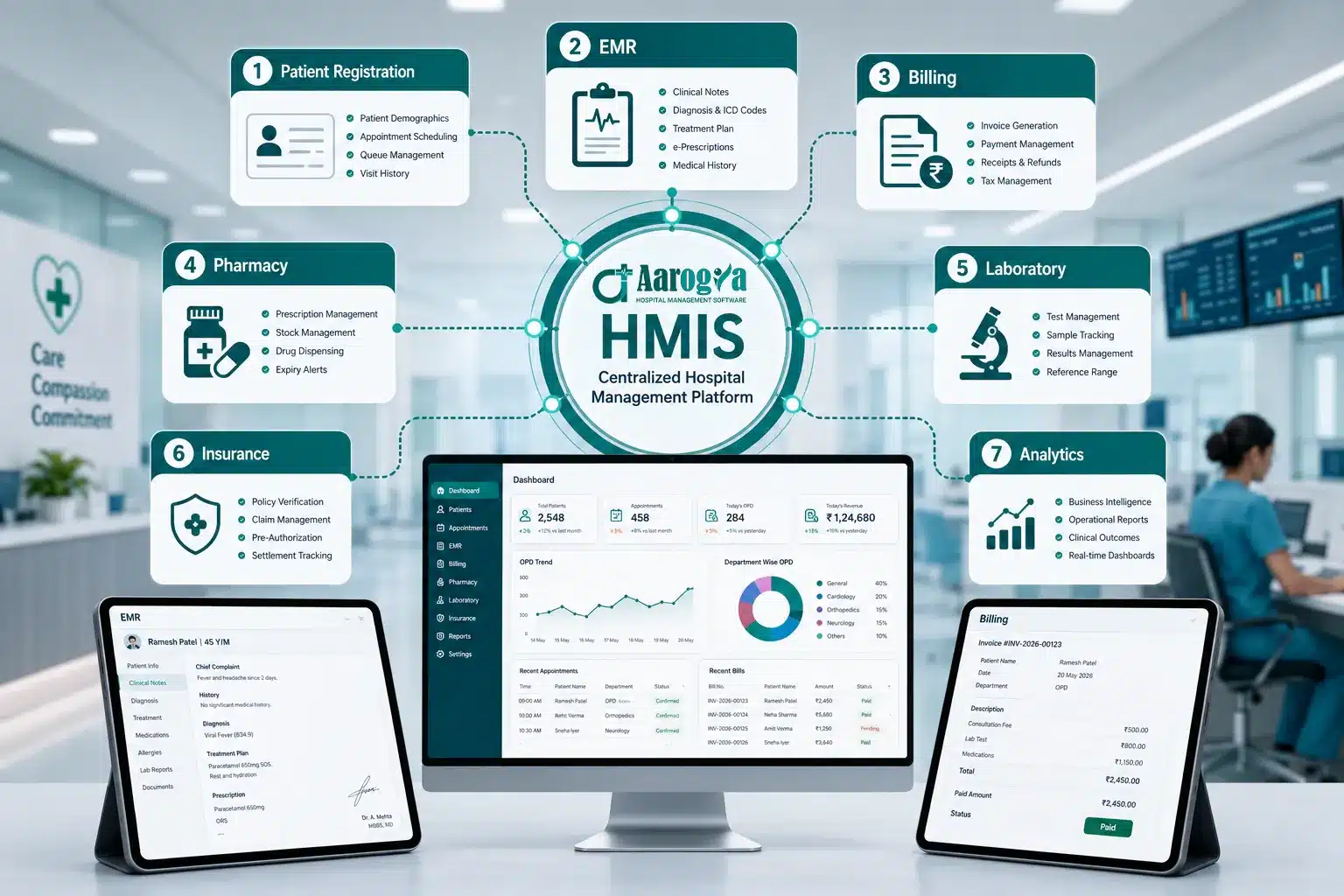
Hospital Management Software is a digital healthcare platform that combines clinical, administrative, financial, and operational functions into a single system.
It allows hospitals to effectively handle:
Patient registration
Electronic Medical Records (EMRs)
Appointment scheduling
Billing and Accounting
Pharmacy management
Lab integration
Insurance Workflows
Inventory Management
Staff coordination
Reports and Analytics
Instead of using many separate systems, HMIS software combines all hospital departments into a single unified ecosystem.
This improves
Workflow efficiency
Data Accuracy
Operational transparency
Departmental coordination
Patient Management
To learn more about healthcare IT systems, go to HealthIT.gov – Health IT Basics.
Why Hospitals in Kanpur Need Digital HMIS Solutions
Healthcare organizations in Kanpur are experiencing increasing patient volumes, growing administrative responsibilities, and higher expectations for quality care. Managing hospital operations through manual processes can make it difficult to maintain efficiency, accuracy, and coordination across departments.
Many hospitals still face challenges such as delayed billing, scattered patient records, communication gaps between departments, and limited visibility into daily operations. These issues can affect both staff productivity and patient satisfaction.
Digital HMIS solutions help hospitals overcome these challenges by centralizing information, automating routine tasks, and enabling real-time access to critical data. By connecting departments such as registration, billing, pharmacy, laboratory, and administration, hospitals can streamline workflows and improve overall operational performance.
As healthcare continues to evolve, adopting a digital HMIS is becoming essential for hospitals looking to enhance efficiency, reduce manual workload, and deliver better patient experiences.
Looking for Best HMIS in kanpur reach out us at : Aarogya HMIS
Also Read :Best HMIS in Bangalore Blog

Digital Healthcare Growth in Kanpur
Kanpur’s healthcare sector is increasingly embracing digital transformation to boost operational efficiency and patient service.
Hospitals and clinics are expanding their investments in
Electronic Medical Records
Healthcare Automation
Cloud-based healthcare platforms.
Digital diagnostics integration.
Smart reporting systems.
Role of ABDM
The Ayushman Bharat Digital Mission encourages hospitals to implement interoperable digital healthcare systems.
ABDM supports:
Digital Health Records
Secure Healthcare Data Exchange
Standardized healthcare infrastructure.
Hospitals that employ ABDM-ready HMIS solutions are better positioned for future digital healthcare ecosystems.
Learn more about the ABDM.
Key Advantages of Digital Hospital Management
Hospitals can automate processes, enhance communication, and establish centralized operational administration with the use of digital HMIS technologies.
- Faster Operations
Automates repetitious administrative processes and increases processing speed. - Improved data accessibility
Doctors and staff can obtain patient records and reports immediately. - Improved Coordination
A network connects departments like billing, pharmacy, and diagnostics. - Reduced errors
Automation reduces manual entry errors and enhances document correctness. - Improved Patient Experience.
Faster service delivery boosts patient happiness and trust.
Hospitals that use digital healthcare technologies are better prepared to handle operational complexity and future expansion.
Key Modules in Hospital Management Software:
- Patient Registration & Electronic Medical Records
Maintains centralized digital patient information and medical histories for easy access. - Management of Outpatient and Inpatient departments
Allows hospitals to easily manage outpatient and inpatient workflows. - Pharmacy management
Monitors drug inventory, stock availability, and dispensing procedures. - Integration in the laboratory
Diagnostic reports are integrated directly into patient records. - Insurance & Billing Management
Invoices, payments, and insurance claims are all automated. - Reporting & Analytics
It provides real-time dashboards and operational information. - Schedule Appointments
Helps handle doctor availability and patient appointments more effectively.
Benefits of Hospital Management Software
Benefits for Hospitals
- Streamlined Operations
Automates workflows across departments and reduces manual dependency. - Better Resource Utilization
Improves management of staff, infrastructure, and inventory. - Faster Decision-Making
Real-time dashboards help management monitor operations efficiently. - Improved Financial Management
Billing and reporting systems improve transparency and revenue tracking.
Benefits for Patients
- Faster Registration
Digital systems reduce waiting times during admissions and appointments. - Easy Access to Records
Doctors can instantly access patient histories and reports. - Better Communication
Improves coordination between patients and healthcare providers. - Enhanced Service Experience
Patients experience smoother and more organized healthcare services.
Best Hospital Management Platforms in India
- Aarogya HMIS
Comprehensive hospital management platform designed for workflow automation, patient management, and operational efficiency. - Practo Ray
Cloud-based healthcare software suitable for clinics and hospitals. - MocDoc
Integrated HMIS platform with diagnostics and billing support. - KareXpert
Connected healthcare ecosystem platform. - HealthPlix
AI-enabled EMR and clinical workflow software.
How to Select the Right HMIS Solution
Understand Operational Requirements
Assess patient volume, workflows, and departmental requirements.
Check Integration Capabilities
Ensure compatibility with:
Laboratory systems
Pharmacy management
Billing software
Insurance workflows
Ease of Use
The software should be user-friendly for doctors and hospital staff.
Data Security
Healthcare systems must include secure access control and protected data storage.
Scalability
Choose software capable of supporting future hospital growth and expansion.

Why Aarogya HMIS for Hospitals
Aarogya HMIS helps healthcare organizations manage clinical and operational workflows through a centralized digital platform.
Key Features
Digital patient records
Workflow automation
Billing and insurance support
Pharmacy and laboratory integration
Real-time dashboards
Multi-department coordination
Business Advantages
Reduced manual workload
Faster workflows
Better operational visibility
Improved communication
Scalable healthcare management
Aarogya HMIS supports hospitals in building efficient and future-ready healthcare ecosystems.
HMIS Implementation Process
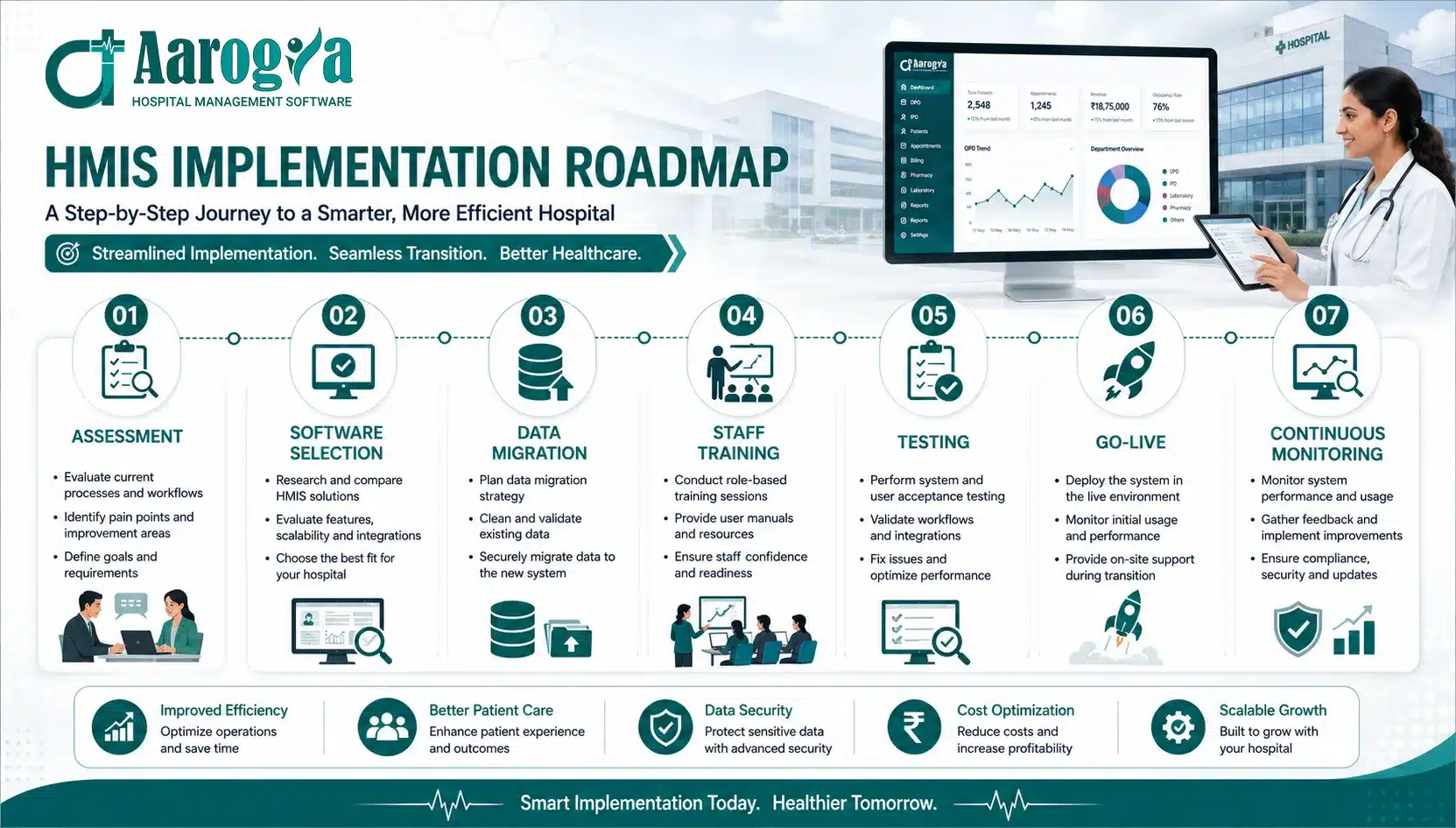
Successful HMIS implementation requires a structured deployment strategy.
Step 1: Operational Assessmen
Identify workflow gaps and operational requirements.
Step 2: Software Selection
Choose an HMIS platform aligned with hospital goals.
Step 3: Data Migration
Transfer patient and operational data securely.
Step 4: Staff Training
Train doctors, nurses, and administrators effectively.
Step 5: Testing & Validation
Verify system functionality before deployment.
Step 6: Deployment & Monitoring
Launch the platform and continuously optimize workflows.


Future of Healthcare Technology
Healthcare technology is evolving rapidly with growing adoption of:
Artificial Intelligence
Predictive analytics
Cloud healthcare systems
Real-time reporting
Automated operational workflows
Future-ready HMIS platforms will continue driving operational efficiency and digital healthcare transformation.
Conclusion
Healthcare organizations today require digital systems capable of managing complex workflows while improving patient experiences and operational efficiency.
Implementing the right Hospital Management Software in Kanpur helps hospitals streamline operations, automate workflows, improve coordination, and support long-term growth.
Solutions like Aarogya HMIS provide hospitals with centralized digital management for clinical, financial, and administrative operations.
As healthcare continues to become more connected and technology-driven, adopting modern HMIS solutions will become essential for hospitals aiming to build scalable, efficient, and future-ready healthcare ecosystems.
FAQs
1. What is hospital management software?
It is a digital platform used to manage hospital operations, patient records, billing, and workflows.
2. Does HMIS help reduce paperwork?
Yes, HMIS digitizes hospital processes and minimizes manual documentation.
3. Can HMIS support multi-specialty hospitals?
Yes, modern HMIS platforms support multiple departments and branches.
4. Is cloud-based HMIS available?
Yes, many healthcare platforms offer secure cloud-based deployment.
5. Does HMIS improve patient care?
Yes, it helps hospitals deliver faster, organized, and more efficient healthcare services.
Categories
Recent Posts
-
 28 Sep 2026What is NABH? Full Form, Accreditation, Certification & NABH-Certified HMS Explained
 -
08 Sep 2026EMR Software: What It Is, How It Works, Key Benefits, Features, and the Future of Digital Healthcare
-
16 Aug 2026What Is a Kiosk Machine? Smart Kiosks in Healthcare | Aarogya
-
27 Jul 2026Patient Drug Registry, Unified Health Interface (UHI) & NHCX FHIR: How Aarogya HMIS Can Power India's Next Generation Digital Healthcare
-
29 Jun 2026Best HMIS Software in Kolkata 2026: How Digital Healthcare Is Transforming Patient Care Across the City
-
25 Jun 2026Best Bank Reconciliation Software | Automated Bank Reconciliation with Aarogya
-
04 Jun 2026Best Hospital Management Software(HMIS) in Kanpur 2026: Complete Guide to Modern HMIS Solutions
-
26 May 2026Ophthalmology EMR Software in India 2026: Complete Guide to the Best Eye Hospital Management System
-
22 May 2026What is NABH? Full Form, Digital NABH, NHCX & HMIS Integration Explained (2026)
-
06 May 2026Best HMIS Software in Bangalore 2026: Complete Guide to Choosing the Right Hospital Management System