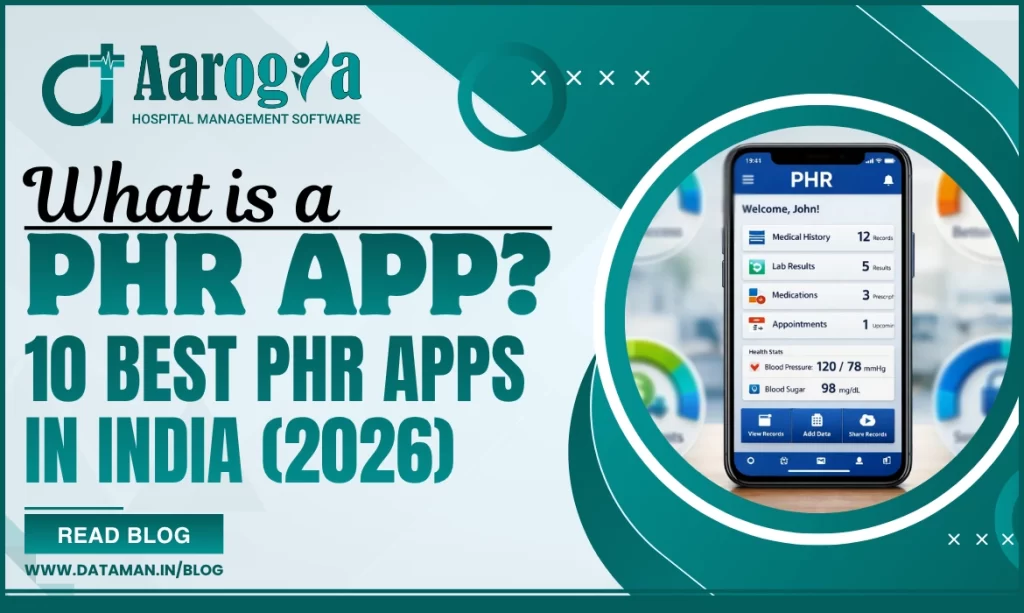
What is a PHR App? 10 Best PHR Apps in India (2026)
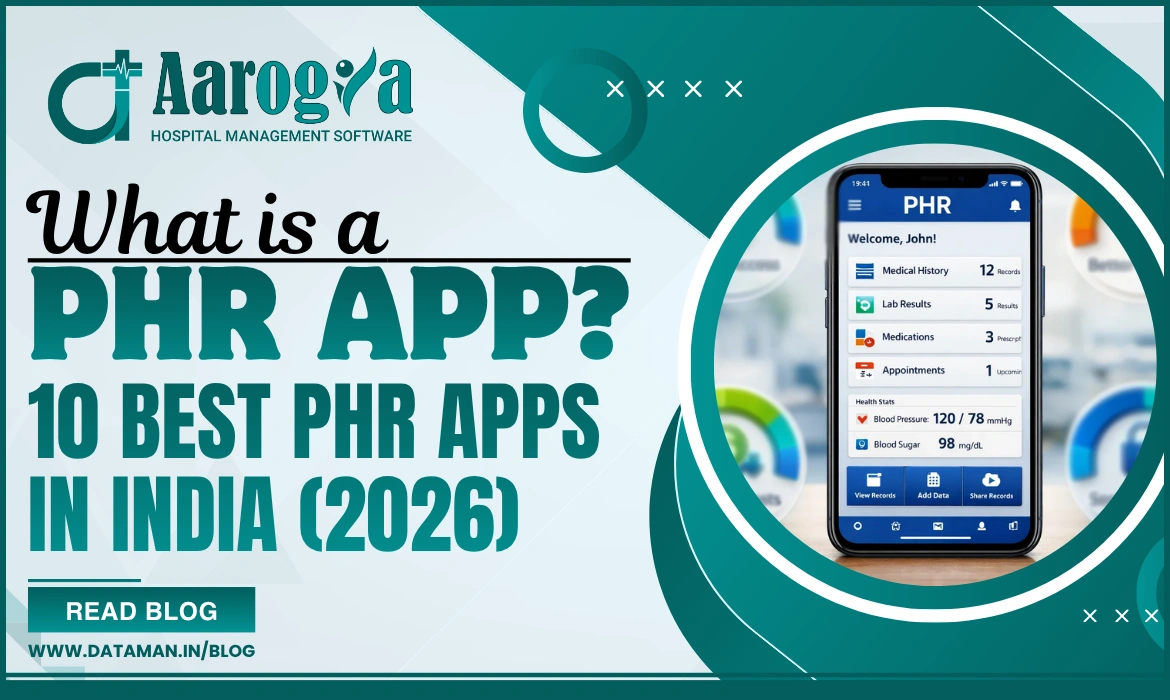
Table of Contents
ToggleWhen people search for a PHR app, they want clarity, control, and convenience.
Manually managing prescriptions, documentation, doctor appointments, and medical history is no longer practicable. A Personal Health Record (PHR) app makes this easy by storing everything in a single safe area.
Allow us to be honest for a moment. Most of us do not consider organizing our medical records until we actually need them.
Usually, during an emergency, a second opinion, or a hospital visit, the doctor will ask, “Do you have your previous reports?” And that’s when the real work begins: scrolling through WhatsApp, analyzing emails, or trying to recall where you left your medication.
This is precisely the problem that a PHR app was intended to solve.
A PHR app provides you with a single, secure location where you can save, manage, and access your entire medical information at any time. Instead of disorganized data, you’ll get a structured, user-friendly digital record of your health.
Global organizations such as WHO, McKinsey and Gartner emphasize the importance of patient-controlled data in improving healthcare outcomes.
ABDM and NDHM are speeding the transition in India.
At the same time, healthcare is no longer about hospitals; it is about interconnected systems. While hospital platforms handle operations behind the scenes, patient apps put that data right in your hands.
This is where technologies like dmAarogya and Aarogi the app quietly enter into the ecosystem, ensuring that healthcare data does not remain locked inside institutions but rather reaches the patient when it counts most.
What is a PHR App?
A PHR app What is it? A digital tool called a PHR app (Personal Health Record application) enables people to safely store, manage, and share their health information. Beyond its description, however, control is what gives it its power. Your medical records are typically kept at hospitals. Your data is dispersed among five separate systems if you visit five different hospitals. By consolidating everything into one location, a PHR app totally alters that. You can retrieve your own history without relying on hospitals by using a PHR app. Your medical life record is in your pocket.
Using a PHR application:
What data is stored is up to you.
You manage who has access to it.
You can share it with physicians right now.
Personal health data greatly lower medical errors and enhance doctor-to-doctor collaboration, according to ASTP
Although this may seem straightforward, the impact is enormous.
Imagine going to the doctor and opening your phone to present your comprehensive, accurate, and well-organized medical history rather than having to describe everything from memory.
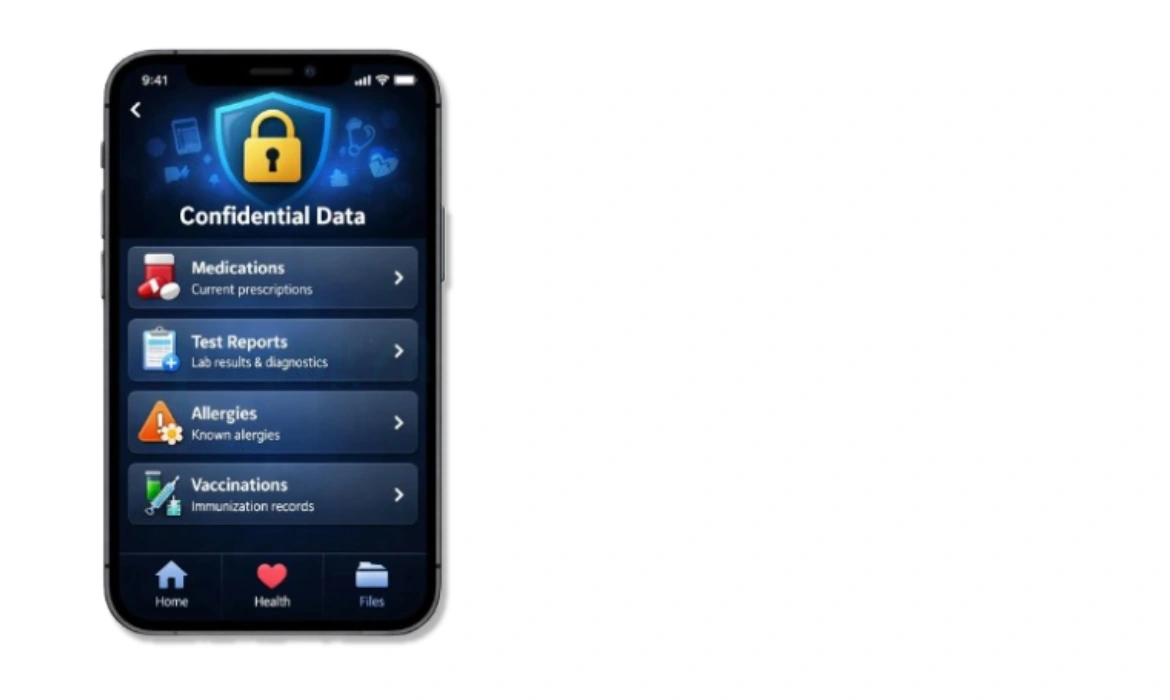
Why PHR Apps Are Becoming Essential
Today’s healthcare system is disconnected. Over time, you may visit several providers, and each visit generates data.
However, that data is rarely linked. This leads to real-world problems like repeated tests, delayed diagnosis, and confusion in treatment.
Digital health records increase productivity and cut down on wasteful spending, according to research from STATISTA and Deloitte. By serving as your personal health hub, a PHR app resolves this issue. Everything becomes organized and accessible rather than depending on papers or recollection.
The transfer from hospital to patient to doctor is smooth when patient apps like Aarogi are linked with systems like dmAarogya.
PHR vs EHR vs EMR
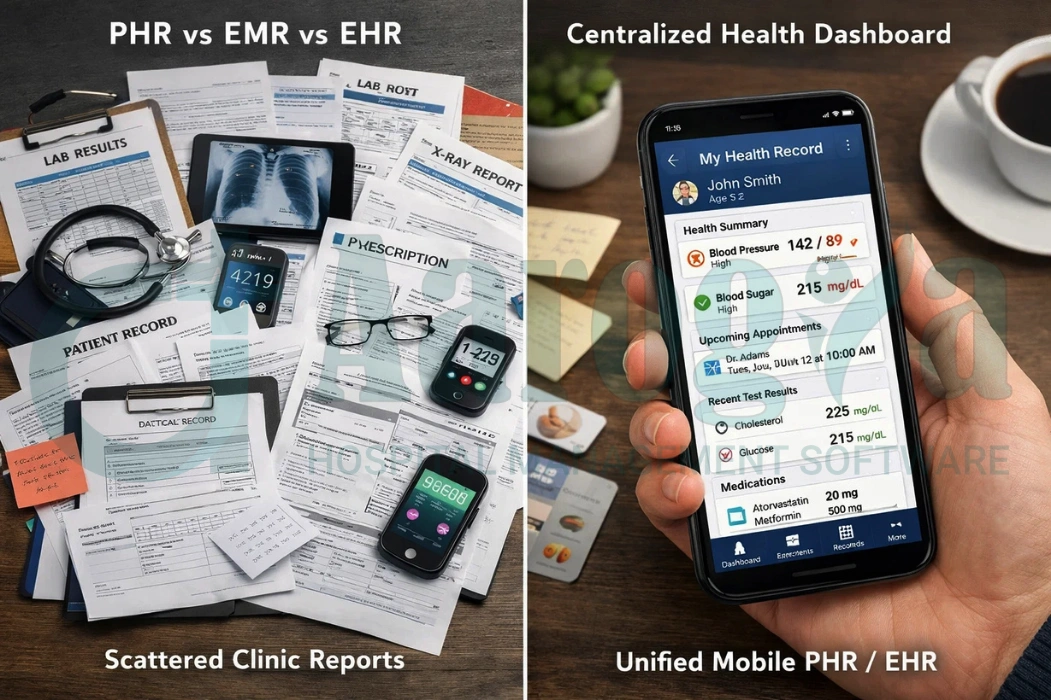
This is one of the most confusing topics, but let’s simplify it clearly.
EMR → Used within a single hospital
EHR → Shared across hospitals
PHR app → Controlled entirely by the patient
The key difference is simple.EMR and EHR are provider-driven systems, while a PHR app is completely patient-driven.
Benefits of PHR App Utilization
A PHR app changes the way you interact with healthcare; it does more than just save data.
You feel more prepared and confident when all of your records are in one location. You are no longer depending on documents or memory.
For instance, having quick access to past diseases, treatments, and allergies can practically save lives during emergencies.
Key benefits
- Centralized medical records
- Quicker diagnosis
- Decreased number of unnecessary tests
- Improved emergency medical treatment
- Better communication between doctors
There is a psychological change that goes beyond these advantages. You believe that you are in charge of your health journey.
This patient-first strategy is also supported by NITI Aayog policies.
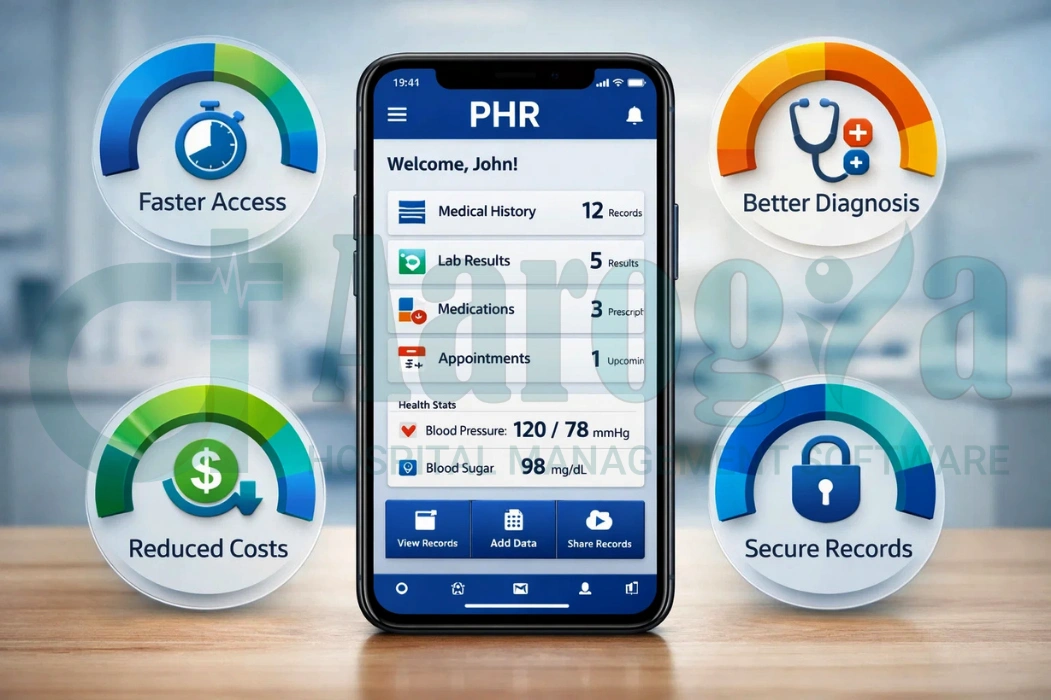
What Does a PHR App Really Store?
Most people underestimate how powerful a PHR app can be.
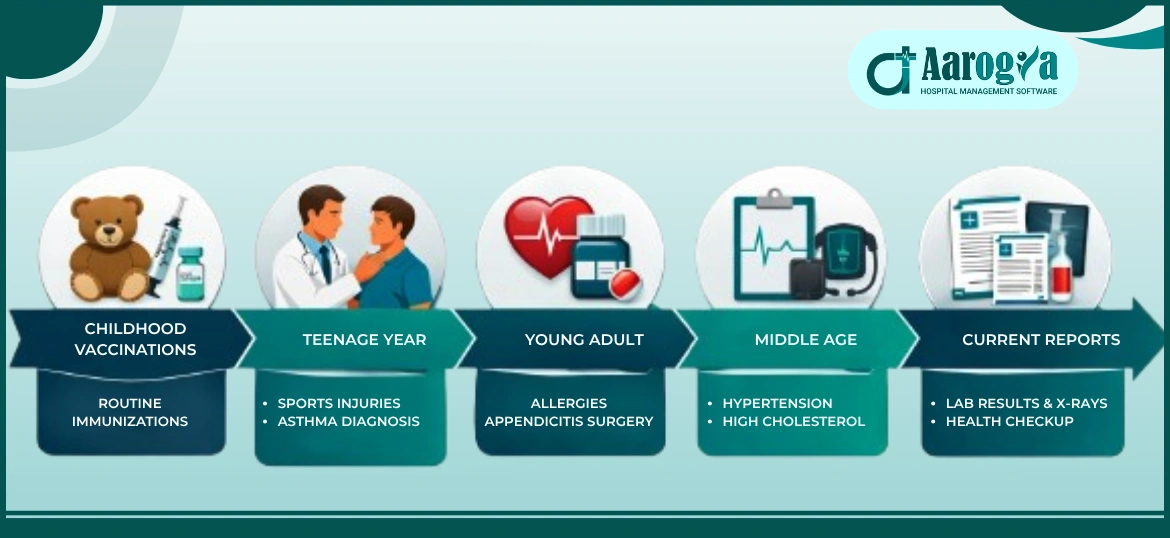
It’s not just about storing reports it’s about building a complete health story over time.
Every doctor visit, every test, and every prescription contributes to your health journey. When all of it is stored in one place, it becomes incredibly valuable for making better medical decisions in the future.
You are able to store
Personal information (emergency contacts, blood type)
Details about doctors
Records of allergies
History of medications
Imaging and lab reports
Records of immunizations
Chronic illnesses
Additionally, you can monitor lifestyle information such as daily health observations, food, and fitness.
The Ministry of Health and Family Welfare claims that organized digital health records enhance treatment continuity.
Are PHR Apps Safe?
When using a PHR app, security is one of the main worries, and for good reason. You obviously want to ensure that your data is secure, confidential, and only available to you because your medical records are extremely sensitive.
The good news is that strong security mechanisms created especially to safeguard healthcare data are incorporated into modern PHR apps. These systems adhere to severe regulatory requirements and internationally recognized standards; they are not random storage devices.
The majority of reliable platforms adhere to international security standards like ISO 27001 and frameworks established by the National Institute of Standards and Technology, both of which are extensively utilized to protect sensitive digital data across industries.
The Ministry of Electronics and Information Technology in India is in charge of regulating digital health platforms, which are increasingly in line with national programs such as the Ayushman Bharat Digital Mission.. This guarantees that health data is managed in a controlled and organized environment.
For you, this simply means that your data is actively safeguarded by several security layers that cooperate in the background, rather than just being stored. Other levels continue to protect your data even if a single level is compromised.
Typically, a reliable PHR app consists of:
End-to-end encryption that safeguards your information while it’s being transferred and stored
OTP or biometric access are proof of secure login authentication.
You may manage who has access to your records by using role-based access permissions.
Audit logs that monitor past access for transparency
User control is an additional significant factor. In contrast to hospital systems, where access is controlled internally, a PHR app gives you direct control.
You choose:
Who is able to view your records?
What data is communicated
The duration of the access’s operation
For example, you may have time-limited or consent-based access when sharing your reports with a physician. This greatly lowers the chances of abuse or unapproved viewing.
Although no digital system can ever be totally risk-free, selecting a reputable and well-reviewed PHR software guarantees that your health information is safe, confidential, and only available when you need it.
Government Initiatives in India
India is actively building a digital health ecosystem.
Programs like National Health Authority and ABDM are enabling nationwide health data access.
This ensures interoperability and seamless healthcare experiences across providers.
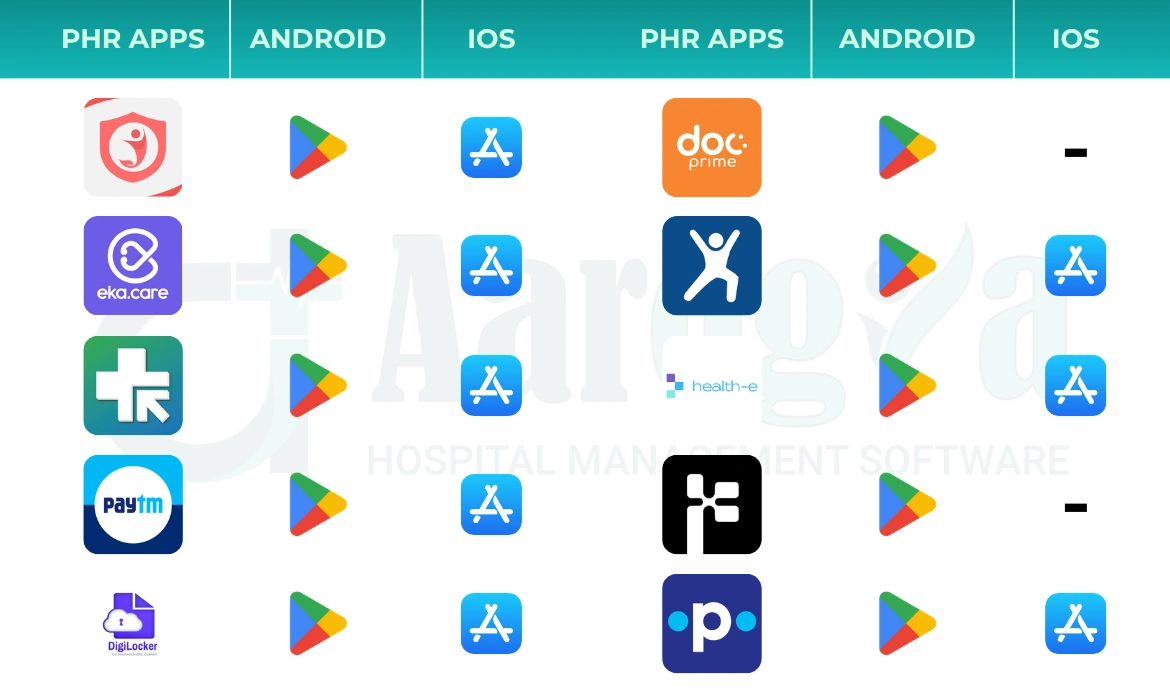
10 Best PHR Apps in India (2026)
Aarogi differentiates out by combining patient registration with PHR features. Rather than simply keeping records, it enables patients to manage their whole healthcare experience, from registration to history tracking. It feels more ordered and easier than the other apps.
EkaCare is noted for its reliable ABHA integration and seamless record sharing. It streamlines the use of digital health IDs and makes it easier to link hospital data.
Driefcase emphasizes speed and simplicity. It enables for swift document upload and retrieval, making it ideal for patients who require immediate access.
Paytm Health Locker connects health records with a popular platform, making them available to a huge number of users.
DigiLocker is a government-backed and generally trusted document storage solution, including health records.
DocPrime offers ABDM integration, access to doctors, and health record storage.
Map My Health prioritizes patient-centric data and emphasizes usability.
Health-e provides structured record storage and future-ready capabilities such as predictive health analytics and report interpretation.
KeyPR focuses on AI-powered insights and health tracking, with additional services such as insurance integration.
Practo combines doctor consultations and basic record management features.
How to Select the Right PHR App
Choosing the proper PHR app gets easier when you follow these key steps:
Step 1: Check the ease of use.
The application should be basic and straightforward to use. You should be able to upload and search records without difficulty.
Step 2: Verify security features.
Consider features such as secure login, encryption, and data security. Your health information should always be safe.
Step 3: Search for Government Integration.
Choose apps that enable ABHA ID or link to systems such as ABDM for improved dependability and data exchange.
Step 4: Check the Sharing Options.
Make sure you can readily exchange records with doctors and limit who has access to your data.
Step 5: Check Family Support.
A solid PHR app should allow you to handle many family members’ records in one spot.
Step 6: Review Ratings and Trust.
Always check app ratings and reviews.
The Future of PHR Apps
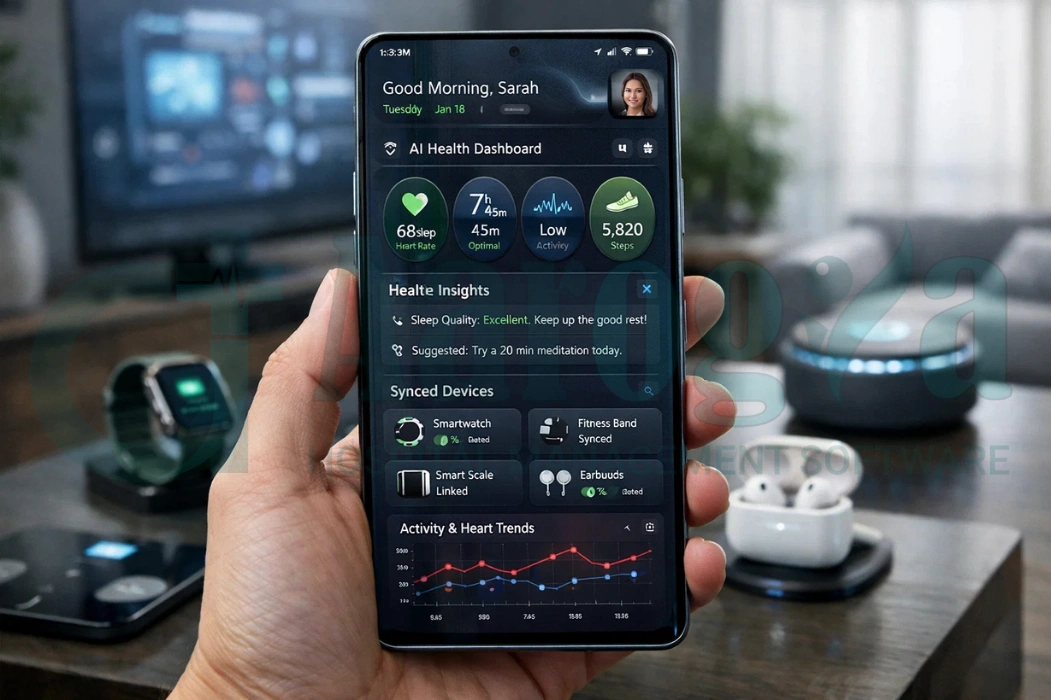
The future of healthcare is going toward intelligent systems.
AI, smart integration, and predictive analytics are influencing the next generation of PHR applications.
HMISS and PWC reports confirm the huge expansion in this domain.
Conclusion
The PHR app is no longer an option; it is becoming required.
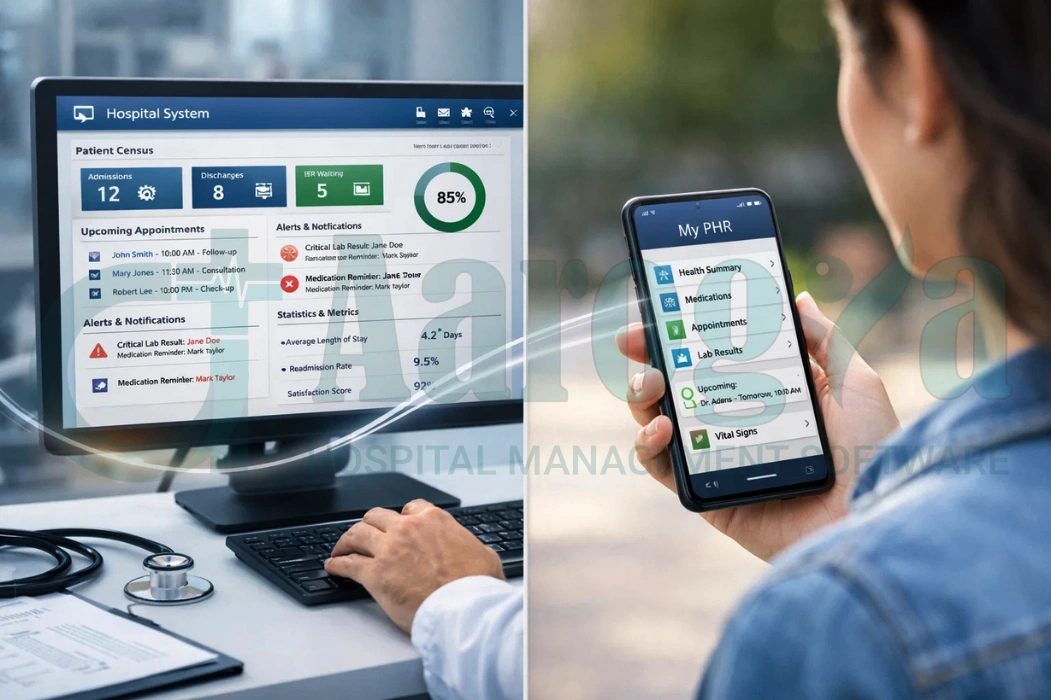
However, the true shift occurs when everything is connected to hospital systems, patient apps, and national infrastructure.
Platforms like dmAarogya and apps like Aarogi depict a linked future in which hospitals and patients are no longer separate systems, but rather part of a single seamless healthcare journey.
It simplifies healthcare, enhances decision-making, and returns control to the patient.
If you want a better approach to manage your health records,Aarogi is a trustworthy PHR app, and is a good place to start.
Categories
Recent Posts
-
 13 Oct 2026TPA Claim Approvals Made Easy with Hospital Billing Software
 -
28 Sep 2026What is NABH? Full Form, Accreditation, Certification & NABH-Certified HMS Explained
-
08 Sep 2026EMR Software: What It Is, How It Works, Key Benefits, Features, and the Future of Digital Healthcare
-
16 Aug 2026What Is a Kiosk Machine? Smart Kiosks in Healthcare | Aarogya
-
27 Jul 2026Patient Drug Registry, Unified Health Interface (UHI) & NHCX FHIR: How Aarogya HMIS Can Power India's Next Generation Digital Healthcare