Best HMIS Software in Bangalore 2026: Complete Guide to Choosing the Right Hospital Management System
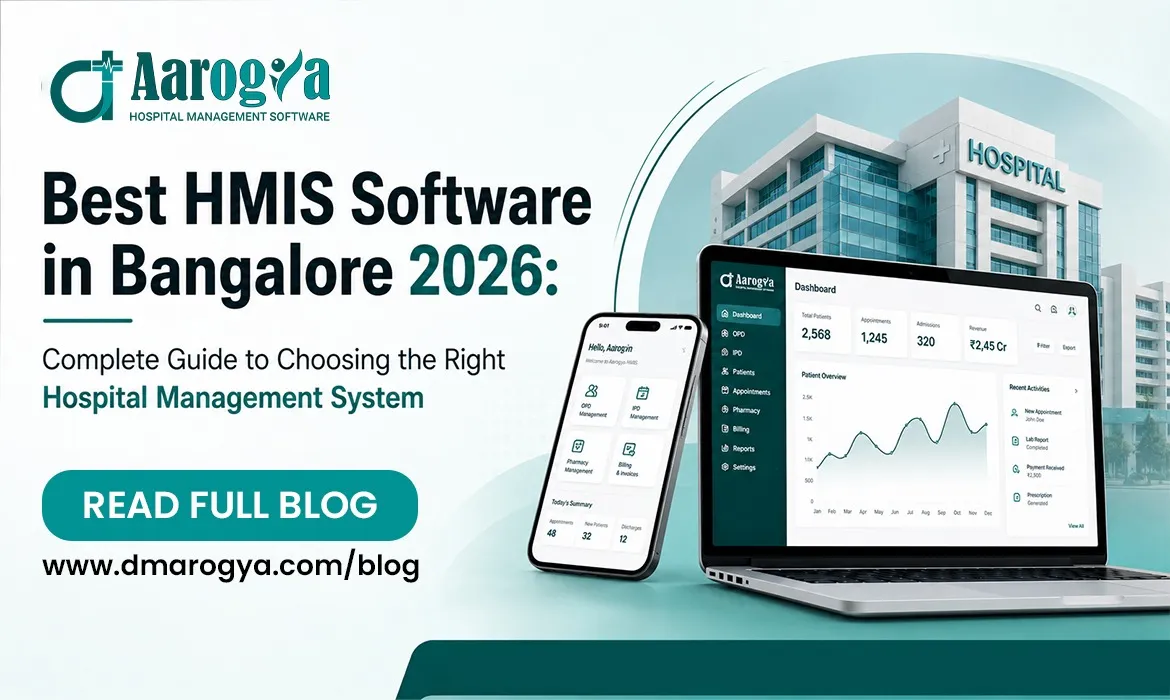
Table of Contents
ToggleIf you’re seeking for the best HMIS software, you’re most likely looking for a stable approach to manage hospital operations more efficiently while also improving patient experience. Manually managing appointments, billing, patient data, and follow-ups may quickly become complex and time-consuming, particularly as patient volumes increase.
This is where the Hospital Management Information System (HMIS) comes into play. It combines all hospital activities into a single, integrated system, allowing healthcare providers to speed up workflows, eliminate errors, and increase departmental cooperation. Hospitals can run more systematically and efficiently by eliminating the need for disorganized systems or paperwork.
In a healthcare-driven metropolis like Bangalore, where demands for speed, accuracy, and service quality are always rising, implementing the correct HMIS system is important.
Platforms like Aarogya HMIS are intended to help hospitals simplify daily operations, improve communication, and ensure a smoother patient trip.
Healthcare nowadays is more than simply therapy; it is about providing a seamless experience. And the proper HMIS software makes this possible.
What is the HMIS in Healthcare?
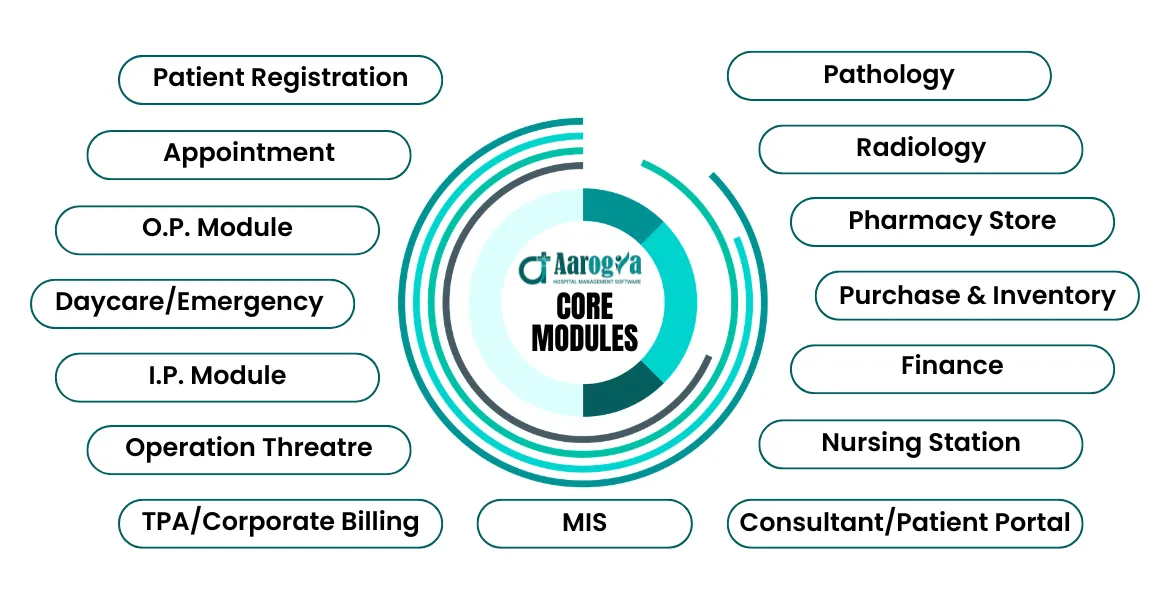
A Hospital Management Information System (HMIS) is a comprehensive digital solution that enables hospitals to manage clinical, administrative, and financial activities from a single platform.
It enables hospitals to effectively handle:
Patient records and medical histories
Appointment scheduling
Billing and financial processes
Pharmaceutical and inventory management
Lab and diagnostic reports
Staff and operational workflows.
Instead of using many separate systems, HMIS integrates all information, increasing accuracy and efficiency.
Why Do Hospitals Need HMIS Software?
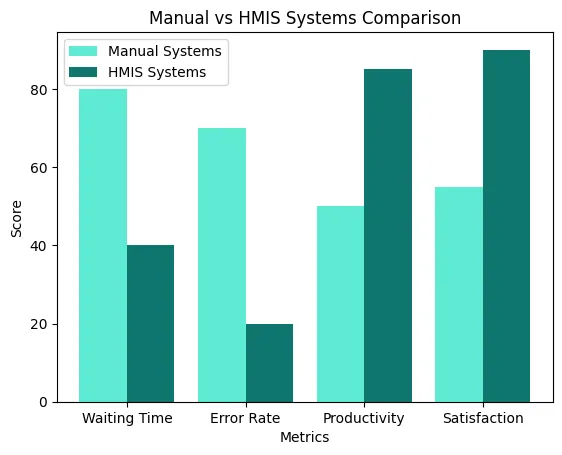
Hospitals today operate in a very dynamic environment, with increasing patient volumes and operational complexity. Manual management frequently results in inefficiencies, which have a direct influence on both staff productivity and patient experience.
Common challenges include:
Long patient wait time.
Missed follow-ups and delays
Lack of coordination among departments
Errors in billing and recordkeeping
The Best HMIS Software addresses these difficulties through automation and structured workflows. It guarantees that all patient interactions and hospital processes are recorded, tracked, and managed effectively.
HMIS systems enable hospitals to increase communication, offer services faster, and make better decisions.
Key Features of HMIS Software
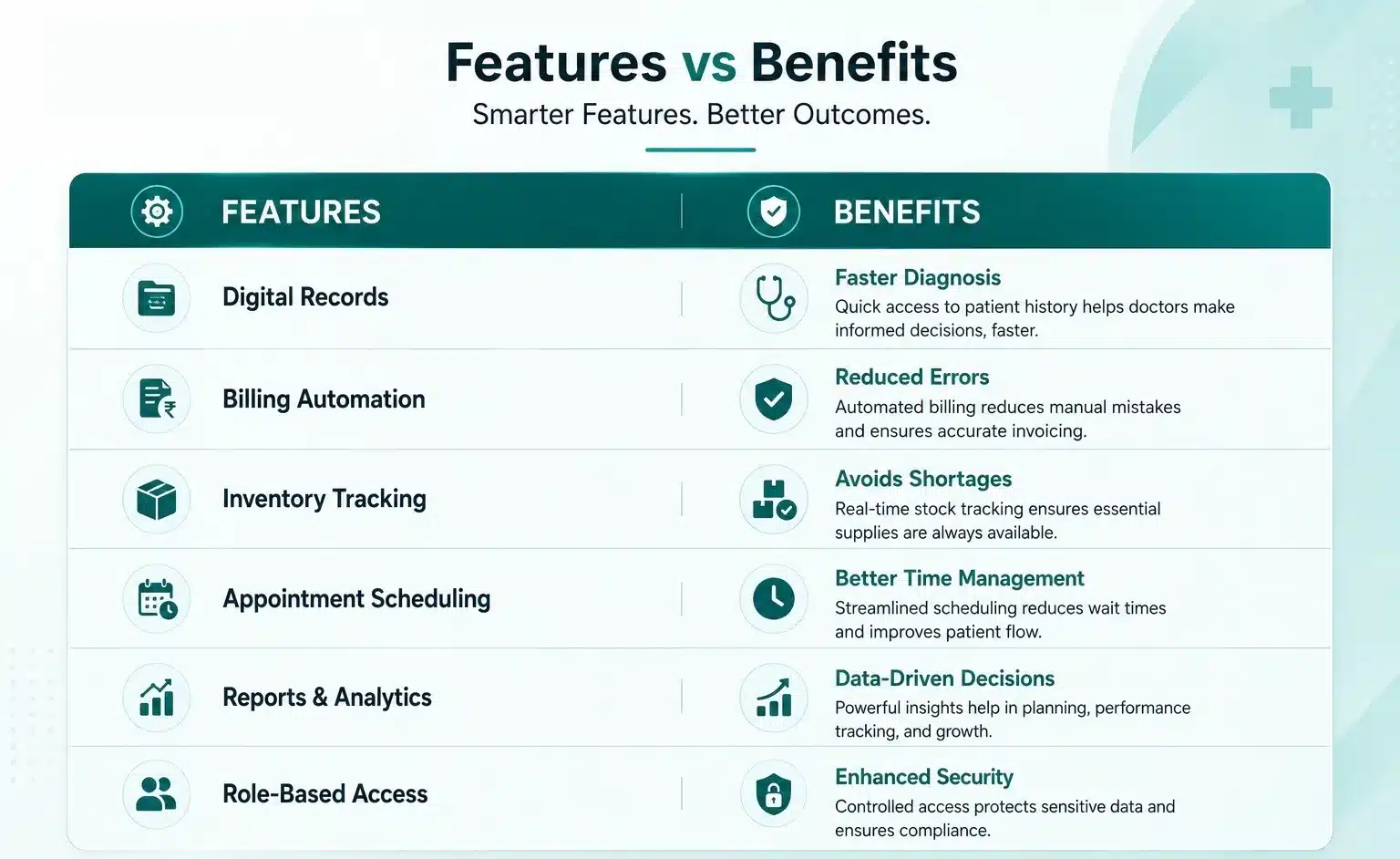
1. Patient Registration & Digital Records
HMIS enables hospitals to maintain electronic records of patients, allowing instant access to medical history and reducing duplication of data.
2. Appointment Scheduling
Efficient scheduling systems help hospitals manage patient flow and reduce overcrowding, improving overall experience.
3. Billing & Financial Management
Automated billing systems ensure accuracy, transparency, and faster payment processing.
4. Pharmacy & Inventory Management
Tracks medicine availability, stock levels, and expiry dates, ensuring smooth inventory control.
5. Laboratory Integration
Diagnostic reports are directly integrated into the system, enabling faster and more accurate communication between departments.
6. Reports & Analytics
Real-time dashboards provide insights into hospital performance, helping management make informed decisions.
To understand how healthcare data improves decision-making, refer to:
Health IT and Health Information Exchange Basics
Bangalore Healthcare Landscape: ABDM Insights
Bangalore is ranked as a Tier 1 city in India’s healthcare environment, making it a key center for advanced medical services and digital integration.
Key insights:
Bangalore is home to about 1000 hospitals and healthcare services, including multi-specialty and super-specialty centres.
Rapid expansion of health-tech businesses and digital health uptake
Strong collaboration with Ayushman Bharat Digital Mission activities.
Why is ABDM important?
The ABDM promotes:
Digital health IDs
Interlinked health records.
Data sharing is seamless.
Hospitals benefit from ABDM-compliant HMIS systems because:
Integrate with the national healthcare infrastructure
Increase patient data accessibility.
Maintain regulatory compliance.
Benefits of HMIS for Hospitals & Patients
For Hospitals
Implementing HMIS software helps hospitals streamline operations and reduce dependency on manual processes. It improves coordination across departments and ensures that all activities are properly tracked.
Key advantages include:
Reduced administrative workload
Improved operational efficiency
Better data accuracy
Faster processing of tasks
Enhanced reporting and monitoring
For Patients
From a patient perspective, HMIS significantly enhances the overall healthcare experience by reducing delays and improving communication.
Patients benefit from:
Faster registration and service
Easy access to medical records
Transparent billing processes
Better communication with healthcare providers
These improvements contribute directly to higher patient satisfaction and trust.
Top 10 HMIS Software in Bangalore & India
1. Aarogya HMIS
A comprehensive and scalable hospital management solution designed to streamline operations, improve efficiency, and enhance patient care.
Explore : Aarogya – Hospital Management Software for Smarter Healthcare
2. Practo Ray
Cloud-based HMIS suitable for clinics and smaller healthcare setups.
3. MocDoc
End-to-end hospital management system with strong billing and lab integration.
4. HealthPlix
AI-powered EMR platform focused on clinical efficiency.
5. MediXcel
Scalable solution for multi-location hospitals.
6. Napier Healthcare
Enterprise-grade solution with advanced analytics.
7. KareXpert
Cloud-based healthcare ecosystem platform.
8. eHospital Systems
Flexible and modular HMIS solution.
9. Caresoft
Focused on automation and workflow optimization.
10. Mediware
Comprehensive digital hospital management platform.
How to Choose the Best HMIS Software
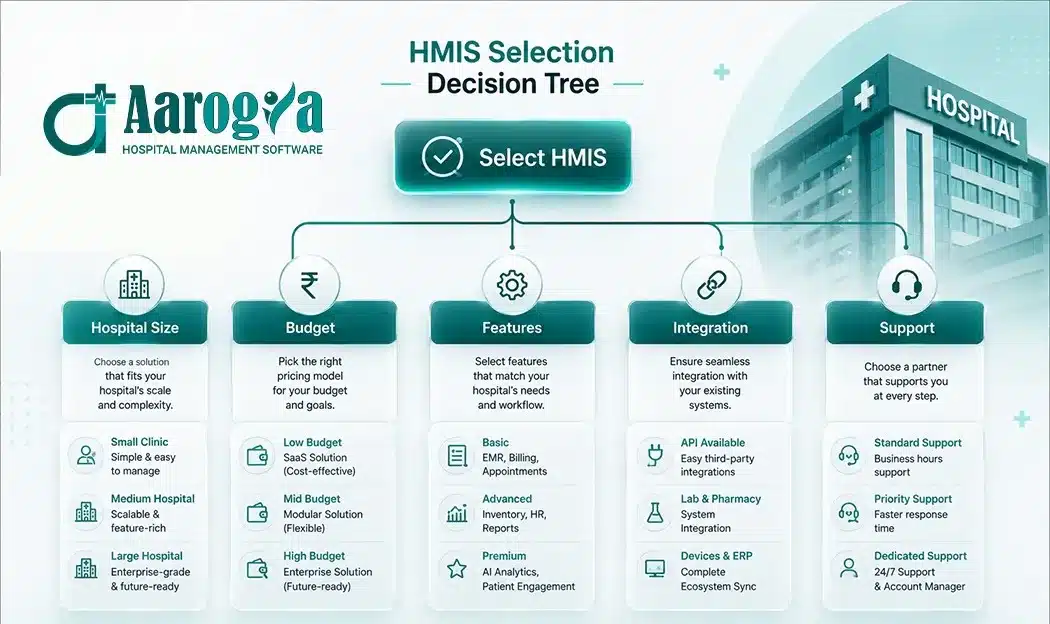
Selecting the Best HMIS Software in Bangalore requires careful evaluation of hospital needs and system capabilities.
1. Understand Your Requirements
Identify whether your hospital needs basic functionality or a comprehensive system.
2. Check Integration Capabilities
Ensure the system integrates with lab, pharmacy, and billing platforms.
3. Ease of Use
The software should be user-friendly for doctors and staff.
4. Data Security
Protecting patient data must be a priority.
5. Scalability
Choose a system that can grow with your hospital.
6. Support & Training
Reliable support ensures smooth implementation and usage.
What Support Should a Good HMIS Software Offer?
Most blogs stop here with features, but what really is important is support and impact.
A strong HMIS should not only exist, but should actively promote hospital growth.
Here’s what hospitals should expect and what Aarogya HMIS provides:
1. Comprehensive Operational Support
Everything from patient registration to discharge should be managed through a single system. Aarogya enables a smooth flow throughout all departments.
2. Real-time data visibility.
Doctors, administrators, and staff should have fast access to live data. Aarogya delivers unified dashboards to ensure total visibility.
3. Workflow automation
Manual labor slows things down. Aarogya automates scheduling, billing, alerting, and reporting. 4. Multi-Department Integration
OPD, IPD, pharmacy, lab, billing, and inventory should work together—not separately. Aarogya integrates all modules into one platform.
5. Scalability for Growth
As hospitals expand, software should grow with them. Aarogya supports multi-branch and enterprise-level expansion.
6. Compliance & Security
With frameworks like ABDM, data security is critical. Aarogya aligns with digital health standards and secure data handling.
Future of HMIS in Healthcare
The future of HMIS is driven by automation, artificial intelligence, and data analytics. Hospitals are increasingly adopting intelligent systems to improve efficiency and patient outcomes.
Key advancements include:
Predictive analytics for patient care
AI-driven diagnostics
Improved resource planning
Enhanced patient engagement
HMIS is becoming a central component of digital healthcare transformation.
Conclusion
In today’s healthcare environment, efficiency and patient experience are equally important. Hospitals need systems that can manage complexity while ensuring speed and accuracy.
Choosing the Best HMIS Software is not just a technological upgrade it is a strategic decision that directly impacts hospital performance and patient satisfaction.
By implementing a robust HMIS solution, hospitals can streamline operations, improve communication, and deliver better care. Solutions like Aarogya HMIS demonstrate how integrated systems can simplify hospital management while supporting long-term growth.
As healthcare continues to evolve, adopting the right HMIS software will be essential for building a more efficient and patient-centric healthcare system.
FAQs
1. What is HMIS software?
HMIS is a digital system used to manage hospital operations efficiently.
2. Why is HMIS important?
It improves efficiency, reduces errors, and enhances patient experience.
3. Is HMIS suitable for small clinics?
Yes, most HMIS systems are scalable.
4. Does HMIS improve patient care?
Yes, by reducing delays and improving access to information.
5. Is HMIS secure?
Modern HMIS systems include strong data protection features.
Categories
Recent Posts
-
 28 Sep 2026What is NABH? Full Form, Accreditation, Certification & NABH-Certified HMS Explained
 -
08 Sep 2026EMR Software: What It Is, How It Works, Key Benefits, Features, and the Future of Digital Healthcare
-
16 Aug 2026What Is a Kiosk Machine? Smart Kiosks in Healthcare | Aarogya
-
27 Jul 2026Patient Drug Registry, Unified Health Interface (UHI) & NHCX FHIR: How Aarogya HMIS Can Power India's Next Generation Digital Healthcare
-
29 Jun 2026Best HMIS Software in Kolkata 2026: How Digital Healthcare Is Transforming Patient Care Across the City