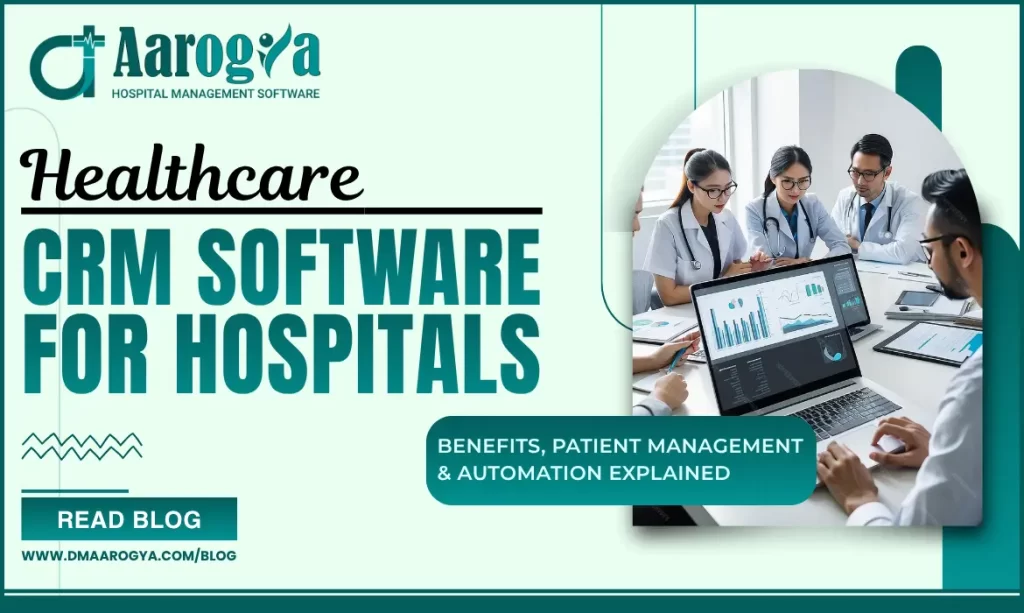
Healthcare CRM Software for Hospitals: Benefits, Patient Management & Automation Explained
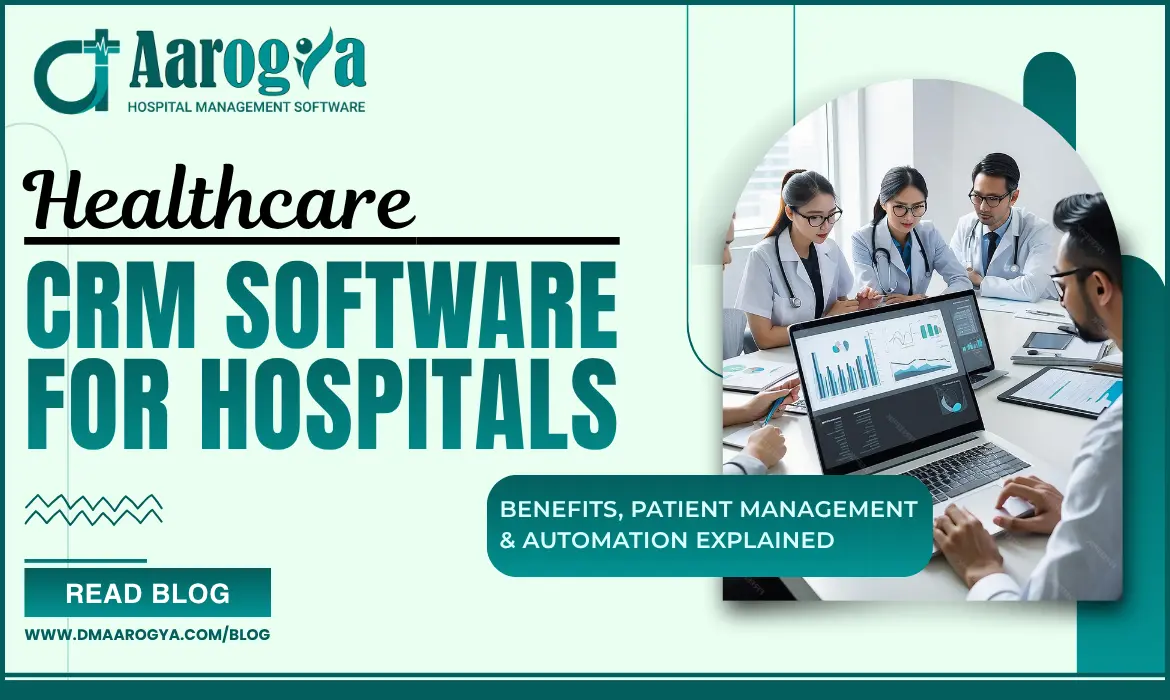
Table of Contents
ToggleHave you ever felt confused in a hospital due to department changes, follow-ups, or appointment delays, or had difficulty receiving updates on your consultation or reports? This is where Healthcare CRM Software makes a difference by helping hospitals streamline patient communication, manage appointments efficiently, and ensure timely updates creating a smoother, more organized experience for both patients and healthcare providers.
In today’s fast-paced healthcare climate, hospitals are about experience, communication, and efficiency. Manually managing patient interactions can result in delays, missing follow-ups, and communication gaps.
Healthcare CRM software assists hospitals in organizing patient data, automating communication, and increasing overall coordination. Everything becomes more organized and efficient, from appointment reminders to tracking patient travels.
Automation tools are becoming more widely used in modern healthcare systems. According to McKinsey, digital transformation is significantly enhancing healthcare operations
Hospitals that combine technologies like dmAarogya with can expedite workflows, manage leads, and improve patient engagement all from a single dashboard.
What is Healthcare (CRM) Customer Relationship Management Software?
Healthcare CRM Software is a system that manages patient interactions, communication, and hospital activities efficiently.
It differs from typical systems in that it focuses on improving interactions and engagement rather than merely data storage.
A healthcare CRM can help hospitals:
Record patient inquiries and follow-ups.
Manage appointments and schedule
Save the patient interaction history.
Automate communication using SMS, calls, or notifications.
Track leads and conversions
To get a deeper understanding of CRM, you can explore: Customer relationship management Wikipedia

Why Do Hospitals Need CRM Software?
Hospitals today deal with huge patient numbers, various departments, and frequent communications.
Managing all of this manually results in:
Delayed responses
Missed follow-ups
Poor patient experience.
Increased workload for employees
Healthcare CRM software handles these difficulties by providing automation and structure.
It guarantees that all patient interactions are tracked and managed correctly.
You may learn more about digital healthcare trends here:
Furthermore, hospitals are increasingly competing on both medical knowledge and service excellence. CRM solutions enable hospitals to provide a consistent and professional experience, which directly affects patient trust and retention.
It guarantees that all patient interactions are tracked and managed correctly.
You may learn more about digital healthcare trends here: Healthcare Technology

Key features of healthcare CRM software.
- Patient Information Management
All patient information is kept in one location. This allows doctors and personnel to access records promptly without having to go in search of folders.
- Appointment Schedule
CRM solutions simplify booking, rescheduling, and reminders. This significantly minimizes the number of missed appointments.
- Lead & Inquiry Tracking
Hospitals receive several questions on a daily basis. CRM helps track each inquiry and convert it into a visit.
- Task management
Staff can effectively assign, track, and fulfill assignments. This guarantees nothing is overlooked.
- Automated Communications
Messages, reminders, and updates can be delivered automatically to improve communication.
- Analytics and Reporting.
Hospitals can monitor patient trends, employee performance, and operational efficiency.

Benefits of CRM in Hospitals
Reduced Manual Workload
Healthcare CRM software automates repetitive tasks. Staff no longer need to manually track every interaction.
Faster Response Time
Patients receive instant responses to their queries, improving satisfaction.
Better Patient Engagement
Consistent communication builds trust and long-term relationships.
Improved Coordination
Departments can work together more effectively with shared data access.
Higher Conversion Rates
Leads are properly tracked, increasing patient conversions.
Data-Driven Decisions
Hospitals can use reports to make better decisions.
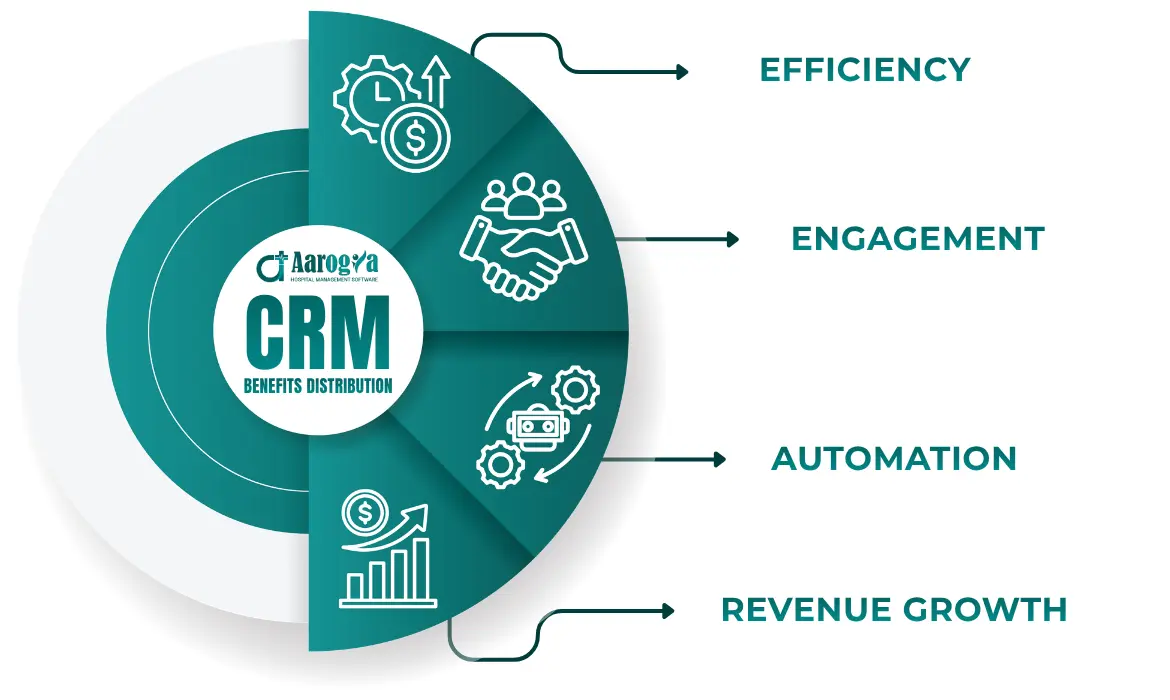
Role of Automation in Healthcare CRM
Automation is the backbone of modern CRM systems.
It helps in:
Sending appointment reminders
Managing follow-ups
Assigning tasks automatically
Tracking patient journeys
Automation reduces human errors and improves consistency.
You can explore automation concepts here: Salesforce CRM

CRM can transform the patient experience.
Patients now expect:
Quick answers.
Simple appointment booking
Clear communication.
Healthcare CRM software guarantees that these expectations are satisfied.
For example:
A patient receives an instant confirmation after booking.
Receives reminders before appointments.
Receives follow-up messages after the consultation.
This results in a smooth and pleasant experience.
CRM use cases in hospitals
1. Managing Patient Inquiries.
CRM successfully receives and tracks queries received via phone, website, or walk-in.
2. Appointment Optimization
Hospitals can properly manage schedules and prevent overcrowding.
3. Follow-up Management
Ensures that patients return for follow-ups or additional therapy.
4. Marketing campaigns.
Hospitals could start focused marketing efforts for their services.
5. Lead Conversion Tracking.
Helps hospitals determine how many queries result in actual patients.
Challenges Hospitals Face Without CRM
Hospitals without CRM face a variety of issues:
Disorganized patient data
Missed appointments
Poor communication
Increased workload
Lack of insights
These difficulties have a direct impact on hospital efficiency and patient satisfaction.

Advanced Features of Healthcare CRM.
Modern healthcare CRM software goes beyond basic functionalities.
This includes:
Predictive analytics can predict patient demand.
AI-driven insights for better decision-making.
Integration of Communication Platforms
Real-time dashboards for monitoring.
These qualities help hospitals stay ahead in a competitive world.
CRM Integration with Hospital Systems.
Healthcare CRM software can interact with:
Hospital Management Systems (HMS)
Electronic health records (EHRs)
The billing systems
Systems used in laboratories
This interface guarantees that data flows smoothly across departments.
For example, when a patient makes an appointment, the data is automatically updated across all systems, avoiding duplication and mistakes.
CRM Security and Compliance
Healthcare data is extremely sensitive. CRM systems ensures:
Secure data storage
controlled access
Adherence to healthcare regulations
Hospitals can protect patient data while still allowing authorized people to access it.
CRM’s function in hospital growth and marketing
CRM contributes significantly to hospital growth by:
Monitoring the success of a campaign
Determining the target market
Increasing patient retention
Hospitals may create more effective marketing plans and draw in more patients by utilizing CRM analytics.
CRM Software for Healthcare in the Future
Future developments in healthcare CRM software are fueled by:
Automation with AI power
Analytical forecasts
Individualized interaction with patients
Healthcare systems are shifting toward more intelligent technologies that can anticipate patient requirements and enhance the provision of treatment.
Here, research-supported insights can be investigated: Healthcare-CRM
Conclusion
Healthcare now focuses on providing a smooth and integrated experience rather than only treating patients. Hospital operations, communication, and patient management are all being transformed by healthcare CRM software.
CRM has a huge impact on everything from patient happiness to workload reduction.
Hospitals may advance their digital transformation with integrated solutions like dmAarogya and Grahaak guaranteeing improved treatment, improved communication, and improved results.
For modern hospitals, Healthcare CRM software is no longer optional it is essential for efficient and patient-centric care
Categories
Recent Posts
-
 13 Oct 2026TPA Claim Approvals Made Easy with Hospital Billing Software
 -
28 Sep 2026What is NABH? Full Form, Accreditation, Certification & NABH-Certified HMS Explained
-
08 Sep 2026EMR Software: What It Is, How It Works, Key Benefits, Features, and the Future of Digital Healthcare
-
16 Aug 2026What Is a Kiosk Machine? Smart Kiosks in Healthcare | Aarogya
-
27 Jul 2026Patient Drug Registry, Unified Health Interface (UHI) & NHCX FHIR: How Aarogya HMIS Can Power India's Next Generation Digital Healthcare